


Supporting Williams sometimes feels like supporting a very talented friend who keeps promising that everything will be different on Sunday. You believe them. You want them to succeed. You can see the potential. Then Sunday arrives, something immediately goes wrong and suddenly You are both sitting quietly with a cup of tea while avoiding eye contact.
That is roughly where I am with the Atlassian Williams F1 Team before the Azerbaijan Grand Prix.
The long-awaited upgrade package is finally expected to arrive in Baku, and I genuinely want this to be the moment Williams begins moving forward again. Not another encouraging practice session followed by a painful qualifying. Not another weekend where Carlos Sainz and Alex Albon spend 50 laps fighting a car that appears to have entered a personal disagreement with grip. Sorry, Williams team, but it’s time to shine, as we fans are praying for you.
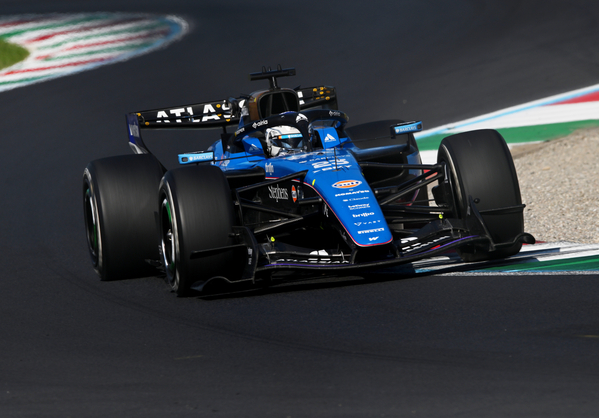
I want to see an actual change.
Williams finished fifth in the Constructors’ Championship last season, giving us a reason to believe the rebuild was finally becoming something real. This year, however, the team has fallen towards the bottom of the standings after a delayed FW48 programme and a difficult start to the new regulations. The team even missed its planned Barcelona shakedown before the season began, and the Baku upgrade has been presented as an important part of its recovery. FINGERS CROSSED
Upgrade Details
The Package: Team principal James Vowles has described the new development as almost an entirely new car or a “B-spec” chassis update.
Aims: The team hopes the new parts will help solve ongoing weight issues and improve overall aerodynamic performance and balance.
That is a lot of pressure to place inside a collection of carbon-fibre parts and, personally, my heart.
The previous race in Madrid made the need for improvement painfully obvious. Sainz and Albon qualified 17th and 16th, separated by only 0.005 seconds. That tiny gap told me something important. Neither driver was leaving a large amount of performance hidden somewhere. They had simply reached the limit of what the car could offer. I didn’t eat Thai and Spanish the whole week after that; I was that sad.
Sainz’s home race then became the sort of weekend you would normally attempt to remove from your memory. A grid penalty dropped him to the back, contact on the opening lap damaged the floor and he eventually retired after struggling with a serious loss of downforce. Albon also spent the race fighting a lack of grip and tyres that refused to stay in the correct operating window.
But the solution isn’t to blame the drivers, the team, or the circumstances. Time will change, and I think it has. Baku, we are ready.
Carlos Sainz knows how to handle pressure. He has raced for some of the biggest teams in Formula 1, won Grands Prix and survived several seasons inside Ferrari. He is intelligent, experienced and excellent at understanding what a car is doing underneath him. Sainz does not merely drive around a problem. He studies it, explains it and tries to find a way through it. That kind of feedback should be extremely valuable while Williams attempts to understand a completely new generation of car.
Then there is Alex Albon.
Albon has already rebuilt his Formula 1 career once. He returned with Williams, became the driver the team could depend on and repeatedly extracted results from cars that were rarely interested in making his life comfortable. If surviving the pressure of Red Bull’s second seat does not prepare somebody for difficult situations, I am not entirely sure what will. Alex has the speed, patience and experience required to fight in the midfield. He is also extremely good at staying calm when the race becomes chaotic, which is a useful quality when racing in Baku, where the walls are close, the braking zones are uncomfortable and a Safety Car can completely rewrite everyone’s afternoon.
Williams has two drivers capable of handling pressure, making decisions during difficult races and fighting cars that should theoretically be faster. What they need is a machine that allows them to attack instead of spending the entire weekend protecting tyres, managing instability and hoping somebody ahead experiences mechanical misfortune. Ahem Ahem.
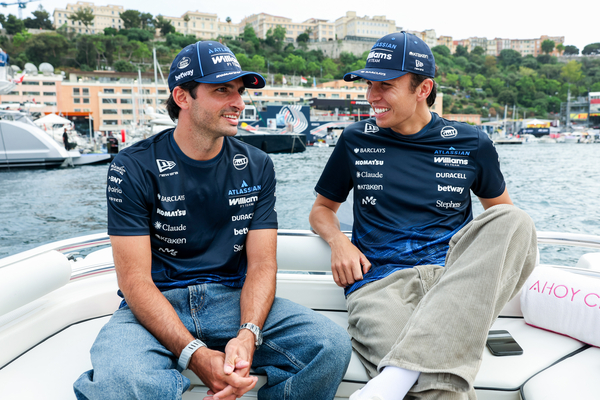
That is why this Baku upgrade matters so much to me and It is IMPORTANT.
I am not expecting Williams to unload the FW48, tighten three bolts and suddenly challenge for victory. Even my optimism has some basic safety features. A single upgrade package cannot repair every problem created during a delayed development programme, and Baku is not exactly the friendliest place to test whether a revised car behaves properly.
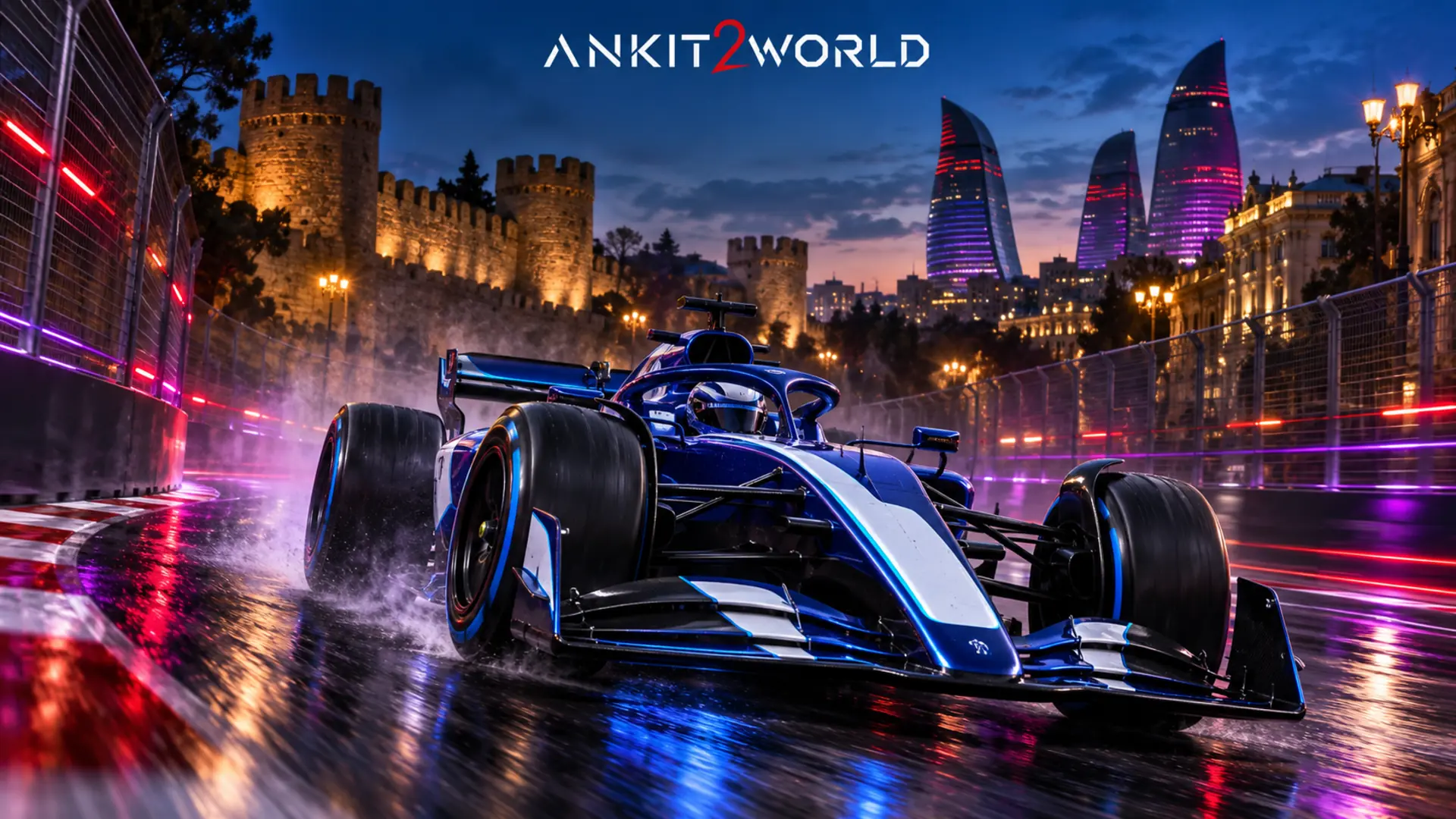
The circuit may offer Williams an opportunity because of its enormous 2.2-kilometre flat-out section. Straight-line efficiency has often been one of the team’s more useful weapons, and Baku rewards a car that can accelerate cleanly and remain difficult to overtake.
However, the rest of the circuit will ask far more serious questions. The drivers need confidence under braking, traction through the slower corners and a stable car through the narrow Castle section. A fast car on the main straight is helpful, but it cannot spend the other parts of the lap behaving like a shopping trolley with one rebellious wheel. Wait, my veggies fell down right now…
For me, success in Baku does not have to mean a podium. I would love one for Williams Team and the Smooth Operator, obviously. I would also love Williams to arrive with a secret championship-winning car and announce that the first half of the season was merely an elaborate prank.
I am trying to remain realistic.
I want to see both cars genuinely competing for Q2, with at least one capable of reaching Q3 without needing rain, red flags and assistance from several racing Gods. I want Sainz and Albon to feel confident enough to attack the braking zones instead of constantly correcting the car. Most importantly, I want Williams to have race pace that keeps it inside the points conversation.
That would be progress and will make my bumps go ooohhh. No, but seriously.
The concern is that we have heard hopeful language about Williams before. New regulations, new facilities, new leadership, new drivers and another long-term plan. Every rebuild sounds convincing when discussed inside a press release. The truth only appears when the lights go out and the stopwatch begins behaving without sympathy.
Atlassian Williams F1 is one of the most important names in Formula 1. I am not saying history automatically gives the team a right to win, because Formula 1 does not award points for beautiful memories. However, Williams should be building towards more than occasional points and emotional celebrations for reaching Q3.
The team is meant to compete. It is meant to frighten the established order occasionally. It is meant to give two talented drivers a car worthy of their ability. Can Williams achieve that again?
Yes, I believe it can. Otherwise, I would not care this much.
I support this team. I want Sainz and Albon to succeed, and I want to see the Williams name moving upwards again. Perhaps Baku becomes the beginning of that change. Perhaps we finally watch those blue cars fighting for meaningful points along the fastest section of my favourite circuit.
Or perhaps Sunday ends with me staring silently at the television while Williams explains that the data remains encouraging.
Please do not make me hear that sentence again. Baku is the opportunity. The upgrade is arriving. The drivers are ready.
Now it’s time to prove the car is ready to join them.
Waiting for Sainz and Albon to make blue dangerous again.
aKi Malik



No Comment! Be the first one.